7 Signs Your Water Heater Is Failing (Don't Ignore #3)
Rusty water, strange noises, lukewarm showers — these 7 signs mean your water heater may be failing. Learn when to repair vs replace in Aurora.

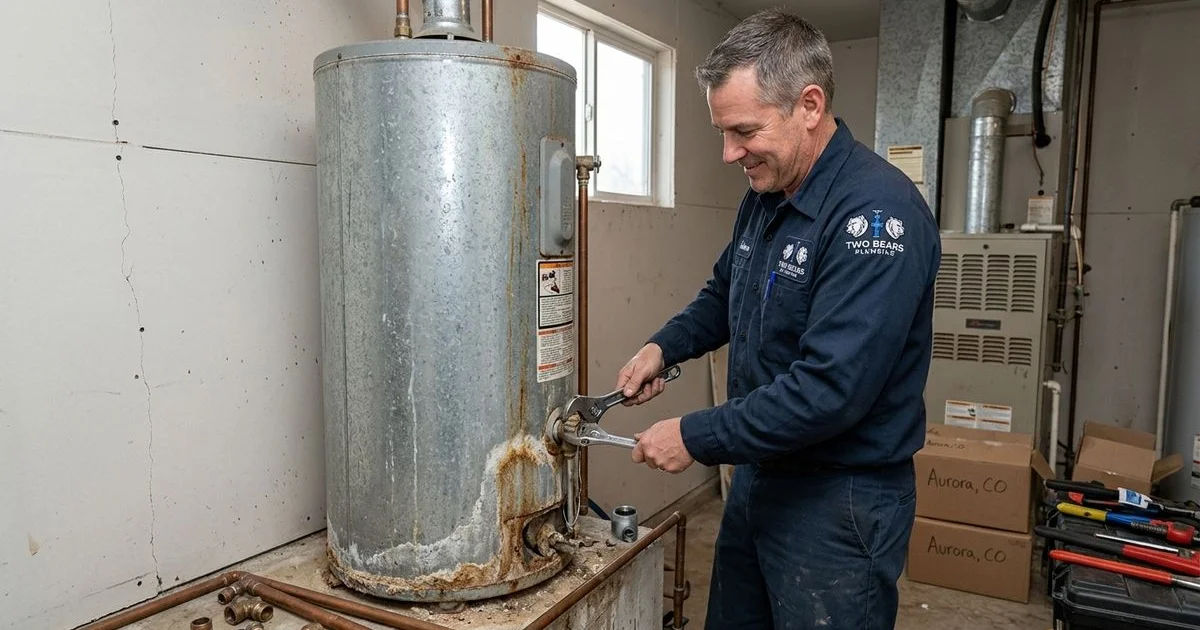
We constantly see Aurora homeowners caught off guard by sudden plumbing failures.
The reality is that your water heater works quietly in the background every single day. It heats water for showers, dishes, and laundry without much fuss. Our local environment makes this job incredibly difficult.
Hard water loaded with calcium and magnesium causes sediment to build up fast. You might take this appliance for granted until you step into a freezing shower.
Our team wants to help you spot the 7 signs your water heater is failing before a minor issue becomes a flooded utility room. Let’s look at the data and explore exactly what to do when these symptoms appear.
1. Your Water Heater Is Over 8 Years Old
Manufacturers rate standard tank water heaters for 8 to 12 years. This rated lifespan assumes ideal conditions and soft water. Our Aurora service calls tell a very different story.
Local water measures an extreme 11.2 grains per gallon (GPG) of hardness. This specific measurement classifies our water as “very hard” by national standards. We often see tanks corrode and fail right at the 6 to 8-year mark due to this mineral density.
If you skip annual flushing, the interior is likely packed with sediment. You can check the exact age by looking at the manufacturer label. The serial number usually encodes the production date in the first few characters. Our technicians are happy to help you decode it over the phone if you get stuck.
Common serial number formats by brand:
- Bradford White: The first letter indicates the year, and the second indicates the month.
- Rheem: The first four digits typically represent the month and year of manufacture.
- A.O. Smith: The second and third digits usually show the year.
2. Rusty or Discolored Hot Water
Corrosion happens from the inside out. Rust-colored water from your hot tap means the interior lining is actively failing. This assumes your cold water still runs perfectly clear.
Our first suspect is always a depleted anode rod. This crucial component attracts corrosive elements to protect the steel tank.
Once that sacrificial metal is gone, the water attacks the tank itself. You can sometimes extend the unit’s life by replacing a worn anode rod early. A standard magnesium or aluminum replacement part costs about $30 to $50.
Our professional replacement service typically runs between $200 and $300 in 2026. This small maintenance fee is much cheaper than buying a whole new system.
We strongly recommend inspecting the rod every three years. If visible rust is already flowing from your faucets, it is too late for a simple part swap. The tank lining is compromised, making replacement the only viable option.
Anode Rod Materials Compared
| Material Type | Best Use Case | Average Part Cost |
|---|---|---|
| Magnesium | Standard Aurora water conditions | $30 - $50 |
| Aluminum | High-pH water or smelly water issues | $25 - $50 |
| Powered (Corro-Protec) | Long-term protection against severe hard water | $150 - $200 |
3. Popping, Rumbling, or Banging Sounds
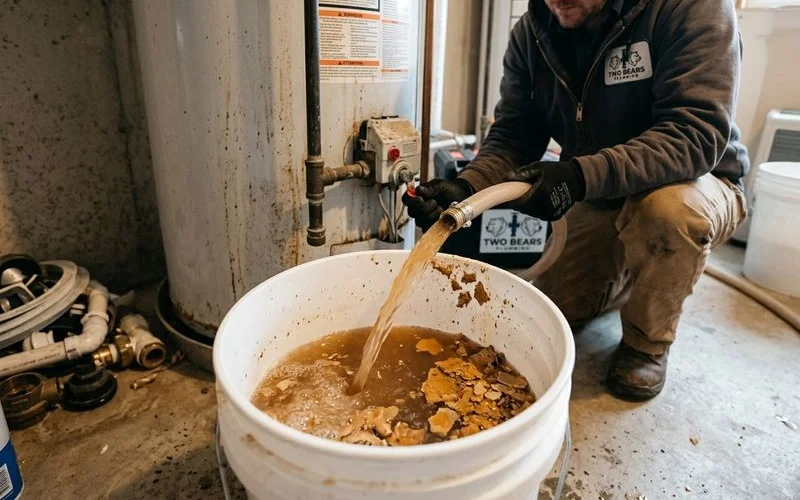
Strange noises are a massive red flag. You should never ignore popping, rumbling, or banging sounds coming from the utility room. These alarming noises occur when sediment hardens into a solid layer at the bottom of the tank.
Our hard Aurora water drops excess calcium directly onto the burner plate. Water gets trapped underneath this heavy mineral crust. We hear these exact banging sounds when that trapped water boils and bursts through the crust.
This sediment layer acts like a thick insulating blanket. The burner has to work significantly harder just to heat the water above it. Our local data shows this mineral buildup reduces heating efficiency by up to 29%. This constant overheating scorches the bottom of the tank and accelerates metal fatigue.
Annual flushing prevents this calcification from taking hold. Hardened sediment is nearly impossible to flush out once it solidifies. We fix sediment-related failures more frequently than any other plumbing issue in Colorado.
“A thick layer of sediment reduces heating efficiency by up to 29%, costing Aurora homeowners hundreds in wasted energy each year.”
4. Lukewarm Water or Running Out Faster Than Usual
Cold showers mean your system is failing to keep up with demand. A broken dip tube is a common culprit that many people overlook. This internal plastic pipe directs incoming cold water to the bottom for heating. Our technicians find that a snapped dip tube mixes cold water directly into the hot supply line at the top.
Gas models might suffer from a weak thermocouple or a dirty burner assembly. Electric units often fail because one of the two internal heating elements burns out. We also see capacity issues caused entirely by sediment displacement. A 50-gallon tank filled with 10 gallons of rock-hard minerals is functionally a 40-gallon tank.
National plumbing data shows the average water heater repair costs around $615 in 2026. Our approach involves evaluating the age of your unit before recommending fixes. Spending $200 to fix a three-year-old system is a smart move. Paying $600 to patch up an eight-year-old tank is usually a waste of money.
Common Temperature Culprits
A quick diagnosis can save you time. Here are the parts most likely causing your temperature drops:
- Dip Tube: Mixes cold supply with hot output.
- Upper Heating Element (Electric): Causes water to never get fully hot.
- Lower Heating Element (Electric): Causes hot water to run out very quickly.
- Gas Valve / Thermocouple: Prevents the burner from firing consistently.
5. Water Pooling Around the Base
Puddles near your utility closet demand immediate action. You must track down the source of the leak before the situation escalates. Small drips often come from repairable spots like the cold water supply connections or the hot water outlet.
Our plumbers always check the temperature and pressure (T&P) relief valve first. This critical safety mechanism releases excess pressure to prevent dangerous tank explosions.
A faulty T&P valve or a loose drain valve is a relatively cheap fix. A leak originating from the tank casing itself is a completely different story. We cannot patch or seal a corroded steel tank. Replacement becomes your only option the moment the internal lining ruptures.
Do not wait to call a professional for a leaking tank. A tiny seep can rapidly turn into a catastrophic failure. Our team has responded to countless emergencies where ruptured tanks flooded basements. Recent industry data shows the average insurance claim for a burst water heater is a staggering $4,444.
Safety Warning: Never plug a leaking T&P valve. Capping this valve removes the only pressure escape route, creating a severe explosion hazard in your home.
6. Frequent Pilot Light Problems (Gas Units)
A pilot light that refuses to stay lit is incredibly frustrating. The most frequent offender is a worn-out or dirty thermocouple. This small sensor detects the pilot flame and controls the main gas valve. Our standard repair for a thermocouple replacement typically costs under $200 for parts and labor.
Sometimes the issue goes deeper than a simple sensor. A failing Honeywell gas control valve can shut down the entire heating process. We also look for improper venting or blocked flues that suffocate the flame. Gas appliances rely on precise oxygen flow to operate safely and efficiently.
Draft issues or inconsistent gas supply lines require expert diagnostics. You should never attempt to modify gas pressure or exhaust pipes yourself. Our licensed technicians carry the right diagnostic tools to test these safety mechanisms properly.
Signs your pilot issue needs a professional:
- The flame burns yellow or orange instead of a crisp blue.
- The pilot goes out immediately after releasing the control knob.
- You smell a faint odor of gas near the base of the unit.
7. Your Energy Bills Are Climbing
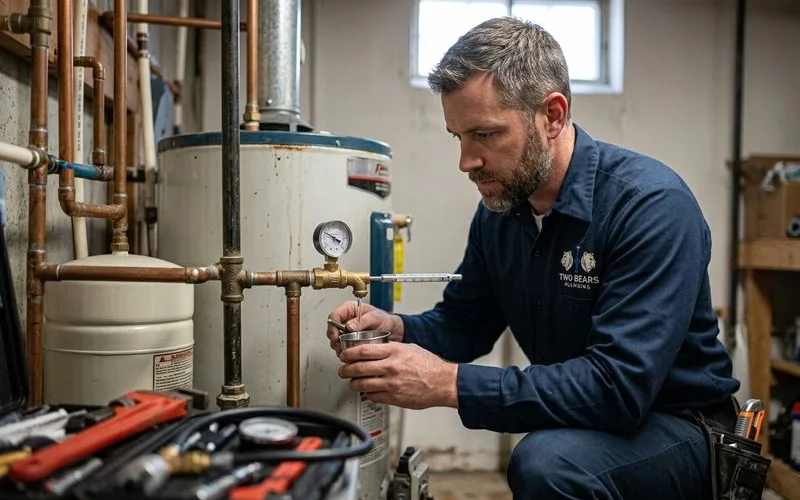
Spiking utility bills often point to a struggling appliance. A failing thermostat or thick mineral scale forces your system to run longer cycles. These extended heating cycles burn significantly more gas or electricity every single day. Our energy audits frequently reveal that old water heaters are the biggest energy hogs in the house.
Most traditional tanks from a decade ago operated at roughly 60% thermal efficiency when brand new. Aurora’s harsh water conditions drop that efficiency drastically over time. The U.S. Department of Energy (DOE) is actively rolling out strict new efficiency mandates taking effect in late 2026. We know that these new federal standards will push the industry heavily toward advanced condensing technology.
Replacing an outdated unit yields immediate financial benefits. Upgrading to a modern tankless water heater can reduce your monthly heating costs by 20% to 40%. Our clients love seeing their gas bills drop right after a new installation.
Efficiency Upgrade Options
- High-Efficiency Tanks: Better insulation and advanced gas valves improve standby heat retention.
- Condensing Tankless Units: Only heat water on demand, virtually eliminating standby energy loss.
- Heat Pump Water Heaters: Use electricity to pull heat from the surrounding air, making them highly efficient.
Repair vs. Replace: The Decision Framework
Deciding between a quick fix and a full replacement can feel stressful. You need to weigh the repair price against the system’s remaining lifespan. The average cost to install a new standard tank in the Denver metro area runs between $1,600 and $2,500 in 2026. Our team uses a straightforward age-based framework to guide this financial choice.
The Replacement Timeline
| Unit Age | Action Plan | Financial Rationale |
|---|---|---|
| Under 6 Years | Repair | Fixing elements or thermocouples provides great value on a young system. |
| 6 to 8 Years | Evaluate | Minor fixes make sense, but severe leaks or deep sediment mean replacement is smarter. |
| Over 8 Years | Replace | Constant repairs in hard water environments quickly exceed the cost of a new unit. |
We always provide transparent pricing so you can make an informed choice. Pouring hundreds of dollars into a ten-year-old tank is rarely a sound strategy. Our goal is to install reliable systems that protect your home from sudden leaks.
Schedule a Water Heater Inspection
Delaying maintenance almost always leads to more expensive property damage.
Routine checkups catch minor corrosion before it breaches the steel casing. Our certified technicians handle water heater repair across the entire Aurora region. Field crews inspect, repair, and install both conventional and modern tankless models.
You deserve an honest assessment and clear, flat-rate pricing on every single option. Call us at (720) 903-1527 to book an appointment or request emergency plumbing services for active leaks. Our crew is ready to restore your hot water quickly and professionally.
Take action today to protect your property and your wallet.
Need Plumbing Help in Aurora?
Two Bears is your local Aurora plumber. Call now for same-day service. Upfront pricing, no hidden fees.
Call (720) 903-1527Related Service: Water heater repair in Aurora →